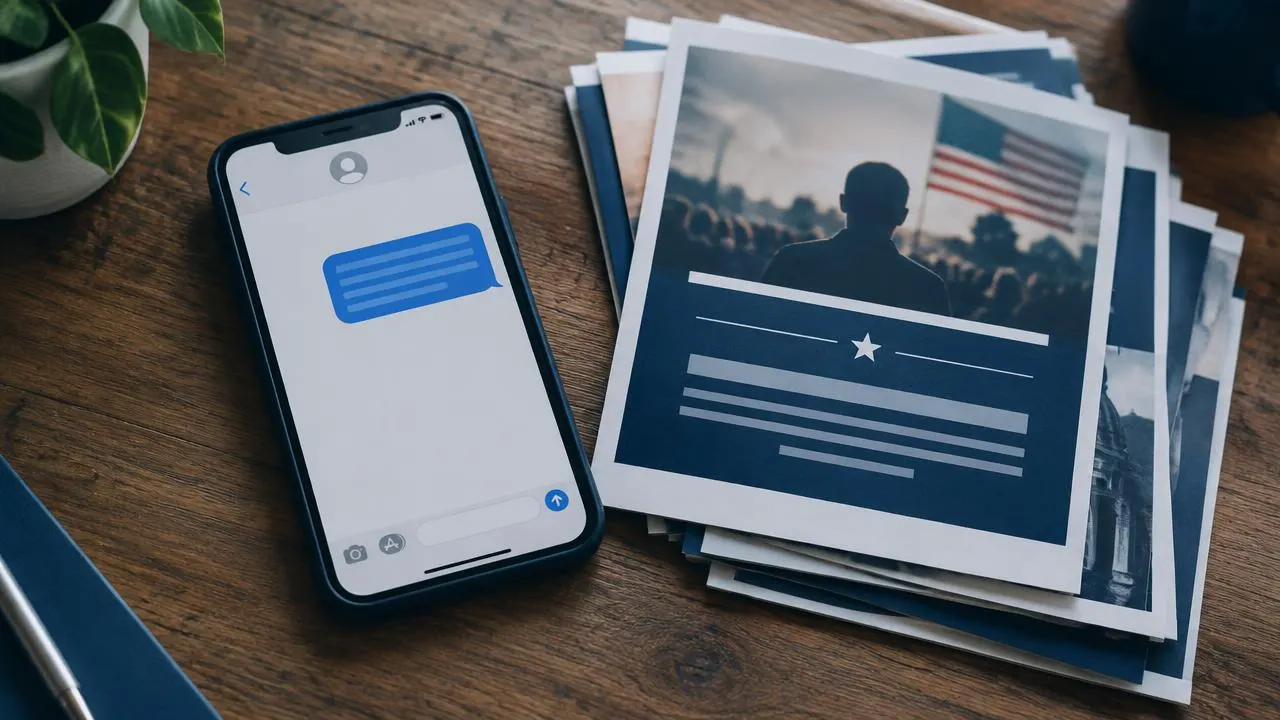
Direct mail has been a campaign staple for decades. Text messaging is the newer channel that puts your message in a voter''s hand within seconds. Campaigns often ask which one works better — but the more useful question is what each channel does well, and how to combine them.
How the channels differ
Speed
Mail takes days to design, print, and deliver. Text messages arrive almost immediately. For time-sensitive communication — early voting reminders, event turnout, rapid response, Election Day GOTV — SMS has a clear advantage.
Format and depth
A mail piece can carry a full narrative: images, detailed arguments, and information a voter can keep on the kitchen counter. A text message is short and fleeting. Mail persuades with depth; text persuades with repetition and timing.
Targeting and data
Both channels can be targeted to specific voters using the voter file. Mail requires accurate addresses; texting requires accurate mobile numbers, which can be harder to source and require more list hygiene.
Cost structure
Mail costs include design, printing, and postage, and scale with the size of the universe mailed. Texting costs scale with message volume, message type (SMS vs. MMS), platform fees, and any staffing for peer-to-peer programs. Comparing the two requires looking at cost per meaningful contact, not just cost per piece or per message. Actual pricing varies by vendor and volume, so get current quotes for your program.
Engagement
Text messages are typically read quickly and can generate replies — real conversations with voters. Mail is one-directional but physical: it can sit in a home for days. Neither channel persuades on its own; both work as part of a repeated, coordinated contact program.
When mail makes sense
- You need to tell a fuller story with visuals and detail.
- Your target voters are older or less responsive to texting.
- You want a tangible piece voters encounter multiple times.
When SMS makes sense
- Timing is critical — early voting, Election Day, breaking developments.
- You want two-way conversation, such as volunteer recruitment or voter questions.
- You are fundraising with a direct ask and a link.
Why strong campaigns use both
The channels reinforce each other. A voter who sees your mail piece and then receives a timely text experiences a coordinated campaign. A common pattern: mail builds the case over weeks, and SMS drives action at decision moments. Plan them together from one voter contact strategy rather than as separate purchases.
Learn more about our political SMS marketing programs.
Next step
Schedule a campaign consultation and we will help you design a voter contact program that uses each channel where it is strongest.